
Thursday, March 24, 2011
I believe, help thou mine unbelief
Today's Gospel (St. Mark 9:17-29) finds Jesus helping a man who admits that he both believes and does not believe (Lord, I believe; help thou mine unbelief), just like us. Therefore let us take this man's prayer to heart, for in spite of his weakness Jesus helped him, and was tenderhearted toward his poor child. The sermon.


Sunday, March 20, 2011
The Canaanite Woman

The Canaanite woman follows Jesus into the wilderness: as we saw him there last Sunday, so we see her faith there today: she must trust and persist in the face of his seeming indifference. Yet she is richly rewarded. The sermon.
Wednesday, March 16, 2011
Ambassadors in Disguise
The sending of the seventy (St. Luke 10:1-20) depicts an embassage humbly sent, with "neither purse, nor scrip, nor shoes," and instuctions to "salute no man by the way." For these are not to trumpet their high station but their Master, who himself went the way of the cross. Yet they had the ability to tread on scorpions and drive out demons. Satan falls from heaven when they preach. So also whenever ministers proclaim the Gospel, Satan is driven out and exorcised: he falls again from heaven. The sermon.
Monday, March 14, 2011
Not to Condemn, but to Save
Jesus' rebuke of his disciples (St. Luke 9:49-56) is also one we should take to heart, for our judgments, our condemnations, our failure to see things through the eyes of his mercy; for it was that mercy which saved us. The sermon.
Sunday, March 13, 2011
Lent I Invocabit

Today's Gospel finds Jesus in the wilderness replying three times to the devil, citing Deuteronomy. It's informative that the three references are to words given to the children of those who perished in the wilderness, who had failed to learn the three lessons here: that man does not live by bread alone but by every word that proceeds out of the mouth of God, that you should not tempt the Lord your God, and that you should have no other Gods. All three are manifest failures when the first law was given. Moses broke the tablets, in token that they have broken the law. Then he went back up the mountain to receive the law a second time, a deutero-nomy. But it was not Moses who led the Israelites' children into the promised land; it was one coming after Moses, namely Joshua; or, according to the New Testament name, Jesus. For Jesus is the greater Joshua, and the Great Israelite who perfectly kept all things the Israelites were supposed to keep. And Jesus leads his baptized children into the eternal promised land, through his own keeping of the law. The sermon.
Friday, March 11, 2011
Thursday, March 10, 2011
Wednesday, March 09, 2011
Tuesday, March 08, 2011
Monday, March 07, 2011
The greatest is love
A brief sermon for first Monday vespers, on the Quinquagesima Epistle, I Corinthians 13: here.
Sunday, March 06, 2011
The Blind Beggar

Today's Gospel, for Quinquagesima the threshold of Lent, finds a blind beggar on the roadside near Jericho. Why is he there? Why is he blind? Why, for that matter, is there blindness, or infirmity, or anguish, or sorrow, or pain, or death? God is good, so why is there evil? The question is really insidious, for what it really does is question whether God is in fact good. Yet the question pops up in the heart, indicating the sinfulness of the heart: such a question was first asked in Eden, by the Serpent (hath God indeed said . . .); but now it springs from the heart. The offspring of Eve find in their nature the wickedness first spawned by the devil.
Repent! And find instead in the example of the blind man a pattern for faith. For instead of allowing himself to be cowed by the rebukes of those who would silence his faithful cry for mercy, he cries all the louder. So sure is he of the Savior's mercy that he cries above the din, until Jesus hears and commands him to be brought unto Him.
And all he wants is to see! For of all times to be disappointed at the inability to see, surely this was the bitterest: Jesus is passing by, and he cannot see Him. So Jesus grants him sight immediately, and the first thing he sees is Jesus! So through his enlightened eyes we gain a glimpse of the beatific vision, when at the last our eyes shall see Him, shall behold His face in righteousness. The same eyes that wept so often shall be filled with the glorious sight of eternal beatitude.
This, then, is why Jesus had to go to Jerusalem, though His disciples were loath to go there of all places. It was in order to meet blind Bartimaeus, and more than that, to go the way of the cross to redeem us all, and to give us all, finally, through His merciful kindness, light, and life, and a heavenly vision that shall never end.
The sermon.
Thursday, March 03, 2011
The Sower in St. Mark
Wednesday's (second series) Gospel contains another sower, from St. Mark 4, a man who cast seed into the ground; slept and rose night and day, and the seed springs and grows up, "he knoweth not how." This man is Christ himself, who first preaches, then dies (sleeps), then rises (wakes), and the seed grows until the final harves (judgment). The word does its own work; even Christ himself "goes to sleep" and lets it do its thing. The sermon.
Tuesday, March 01, 2011
Sexagesima Sunday: the Sower went out to Sow

The impediments to the success of the Word are many: the devil, the world, the flesh. In the days of Noah, these had succeeded in turning the entire world away from its Creator. In our day also, the Church is small. The Parable of the Sower is about these things, with a message of hope: still the Word produces a crop an hundredfold. This is only because of the power of God in the Word, against all foes. Just as Christ himself rose from the dead against all the odds, so His word accomplishes that for which it was sent. The sermon.
Wednesday, February 23, 2011
St Matthias
Although the patron's saint of lost causes is St. Jude, it might as well be St. Matthias. Judas' replacement was, it seems from St. Luke's account, supposed to be one Joseph, but the lot fell to Matthias. The sermon.
Tuesday, February 22, 2011
On the sanctoral seasons
As we enter Septuagesima, we consider the difference between the Christmas cycle and the Easter cycle: the former deals with light, the latter with life; the former forms the emotions, the latter, the will; the former is hopeful and yearning, the latter, grave and determined. Thus we begin the trek of training to turn from the mind set of the first laborers in the vineyard who had an evil eye and covetousness, and learn instead to treasure the penny of heavenly grace. Tuesday's sermon.
Sunday, February 20, 2011
Septuagesima

Our aim is to obtain the mind set of the last laborers, who went out without a contract, trusting the goodness of the landowner; and to repent of the mind set of the first laborers, who were full of envy and greed. St. Matthew 20:1-16. The sermon.
Wednesday, February 16, 2011
Revelation to Babes
St. Matthew 11:25-27 contains Jesus' words about how the Father has revealed His wisdom to babes. The sermon.
“Weakness made strong; my confession of faith”
Suzanne Schroeder, a 41 year-old woman in my former parish in Berlin, Wisconsin, died of a rare form of diabetes in 1990. I had ministered to her during her illness, and in the year before she died she wrote this confession of faith which was published in the church’s newsletter after her death. I ran across it the other day, and find it as encouraging now as many did then.
May 1989 Berlin, Wisconsin
I would like to tell you, fellow Christians, what my suffering has done to me, how my suffering has changed me. What would I say to a fellow Christian who must undergo suffering? I would say there’s really nothing to fear, because it brought me so much closer to the Lord. It has taught me that He’s always there; always with me.
When my suffering first began, I was asking, “Why me?” But now that my suffering has brought me closer to the Word, and a greater understanding of the grace of Christ, I am asking, “Why me?” – that is, why should I be so blessed, so loved? Why should He single me out as one to whom to show His mercy?
What I wish to get across to you, fellow believers, is the message of my life; how my weakness is changed into something so strong in my faith. I hope people can see exactly what this (my sickness and suffering) has done to me. It’s unbelievable how something, when you’re sick, can make you so strong in your faith.
I can better understand now how our Lord has suffered for us – not only whv he suffered, but how – why he suffered the way he did is beyond me, because He did it without any pleading or complaints. He did it just for me, because He loves me. And now I know better how much He loves me, when I can understand better what He went through. And that’s so true.
I’d like to have people remember what I went through and how I felt when I went through it, that is, how I changed from a complainer, one who was always questioning God, to one who now sees what He’s doing, and that He is good.
May 1989 Berlin, Wisconsin
I would like to tell you, fellow Christians, what my suffering has done to me, how my suffering has changed me. What would I say to a fellow Christian who must undergo suffering? I would say there’s really nothing to fear, because it brought me so much closer to the Lord. It has taught me that He’s always there; always with me.
When my suffering first began, I was asking, “Why me?” But now that my suffering has brought me closer to the Word, and a greater understanding of the grace of Christ, I am asking, “Why me?” – that is, why should I be so blessed, so loved? Why should He single me out as one to whom to show His mercy?
What I wish to get across to you, fellow believers, is the message of my life; how my weakness is changed into something so strong in my faith. I hope people can see exactly what this (my sickness and suffering) has done to me. It’s unbelievable how something, when you’re sick, can make you so strong in your faith.
I can better understand now how our Lord has suffered for us – not only whv he suffered, but how – why he suffered the way he did is beyond me, because He did it without any pleading or complaints. He did it just for me, because He loves me. And now I know better how much He loves me, when I can understand better what He went through. And that’s so true.
I’d like to have people remember what I went through and how I felt when I went through it, that is, how I changed from a complainer, one who was always questioning God, to one who now sees what He’s doing, and that He is good.
Tuesday, February 15, 2011
Transfiguration - second sermon
Tuesday morning, a homily (shorter sermon)on the Transfiguration, this one a meditation on "This is my beloved Son, in whom I am well pleased." The sermon.
Sunday, February 13, 2011
Transfiguration

Today's Gospel (St. Matthew 17:1-9) provides hope in the midst of fear, comfort in the midst of foreboding, and joy for all whose hope is in the Incarnate One, in that He said to His disciples (and to us), "Arise, and be not afraid." The sermon.
Wednesday, February 09, 2011
Wednesday of Epiphany V
Sermon on St. Matthew 13:44-52, the parable of the treasure in the field, and the parable of the pearl of great price, here.
First Monday Vespers
The sermon for First Monday Vespers, preached on the Epistle for Epiphany V: here.
Sunday, February 06, 2011

Sunday, January 30, 2011

Tuesday, January 25, 2011
The Conversion of St. Paul

Today's sermon on the Conversion of St. Paul. And here's a second sermon, the day after (it's a first class feast here, at St. Paul's).

Saturday, January 15, 2011
Monday, January 10, 2011
Epiphany I

The Gospel about the boy Jesus in the temple shows us an exemplary family. Mary and Joseph took a pilgrimage every year, and Jesus himself was engrossed in the teaching of the Scriptures when he was found in the temple. Nevertheless trouble came to them, as Mary and Joseph sought him "sorrowing" for three days, until they found him there. So also, in Christian life, troubles descend and we must endure trouble sometimes. But this is God's way of showing us that he will not leave us, but will return to us, as joy comes in the morning. When Mary was cradling her dead Son on the day of his crucifixion, perhaps she had a faint memory of what she learned on the day when he was found in the temple on the third day. So he instructs us, until finally he prepares us for our own death, to be followed by Paradise, and the fruition of his glorious Godhead. The sermon.
Wednesday, January 05, 2011
Epiphany
The wise men made a long and arduous journey, possibly taking much the same route as Abraham had taken when he was called out to be the father of God's chosen people. And after seeing the Christ they returned to their own country another way. So let us learn from the wise men, and find the heart of our life in Christ, where he reveals himself to us (in the Gospel and at the altar), and so return to our country another way. The sermon.
Sunday, January 02, 2011
As it is written . . .
Today's Gospel gives insight into the meaning of the entire Old Testament. The sermon.
Sunday, December 26, 2010
St Stephen

The Feast of Stephen comes right after Christmas, and so spoils the festivities with the martyr's blood. Why? The sermon.
Saturday, December 25, 2010
Three Christ Masses

On Christmas Eve, the First Christ Mass included the choir, a portion of which can be heard between the (chanted) Gospel and sermon, in this recording. The Second Christ Mass, at midnight, is my favorite, and the recording of its sermon is here. The Third Christ Mass, in the middle of Christmas morning, is here.
Friday, December 24, 2010
Sunday, December 19, 2010
Advent IV
John the Baptist does not take the bait. He refuses to accept the accolades of the Pharisees' messengers. He confesses "I am not the Christ." And so must we, learning the true meaning of repentance. The sermon for Advent IV, St. John 1:19-28 is here.
Tuesday, December 14, 2010
Advent III Tues
Blessed is he, whosoever shall not be offended in me. Another sermon on Advent III Gospel (St. Matthew 11:2-10) here.
Monday, December 13, 2010
Monday, December 06, 2010
Thursday, December 02, 2010
Sunday, November 28, 2010
Wednesday, November 24, 2010
Tuesday, November 16, 2010
Monday, November 15, 2010
Inheritance is a Gift and Is Not Merited
Sunday's Gospel of the separating of the sheep from the goats, upon the ascertaining of whether they had fed Christ when He was hungry, gave Him drink when He was thirsty, etc., cannot be said to be an affirmation of the merits of work. Were it so, then He would not have said, "Inherit the kingdom . . ." Works are a demonstration of faith in Him, rather than an effort to buff one's own worth. Look to yourself and you will find reason to doubt; look to Him and you find reason to be comforted. The sermon.
Thursday, November 11, 2010
The Kingdom of God Cometh Not with Observation
In St. Luke 17:18-33 Jesus gives us good reason to believe that the kingdom of heaven is hidden beneath its marks. Since it is hidden, all efforts to suggest it may be seen here or there, whether by pedigree, or by "glorious" manifestations of the Spirit, are misguided. Just as the glory of Jesus Himself was hidden when he suffered, so also the church's glory is hidden. The sermon.
Monday, November 08, 2010
Sabre of Boldness nominees?
Nominations for the 2011 Sabre Bearer are also invited. Please submit your nomination to Fr. Eckardt with "Sabre of Boldness" in the subject line.
Simply state the name, address, and telephone number of the nominee and the reasons why he or she is a fitting choice for Sabre Bearer. The degree of the adversity faced by the nominee, a demonstration of steadfast resistance to pressures to compromise the truth of the Gospel, heedlessness of threatened personal consequences, and a clear confession of the truth at stake are considered. The slate of nominees will close on Wednesday, January 19th, 2011. Then the editors of Gottesdienst will meet privately to make their selection.
The editors of Gottesdienst invite all seminary guests to come on over to La Quinta, right after the Symposium banquet, for this gala event.
Sabre of Boldness Recipients
1996 The Reverend Peter C. Bender
1997 The Reverend Jonathan G. Lange
1998 The Reverend Dr. Edwin S. Suelflow
1999 The Reverend Gary V. Gehlbach
2000 The Reverend Peter M. Berg
2001 The Reverend Dr. John C. Wohlrabe
2002 The Reverend Erich Fickel
2003 The Reverend Dr. Wallace Schulz
2004 The Reverend Charles M. Henrickson
2005 The Reverend Edward Balfour
2006 Bishop Walter Obare
2007 The Reverend Dr. Ronald Feuerhahn
2008 The Reverend Aaron Moldenhauer
2009 The Reverend Juhana Pohjola
2010 Rt. Rev. Dr. Paul Kofi Fynn
Simply state the name, address, and telephone number of the nominee and the reasons why he or she is a fitting choice for Sabre Bearer. The degree of the adversity faced by the nominee, a demonstration of steadfast resistance to pressures to compromise the truth of the Gospel, heedlessness of threatened personal consequences, and a clear confession of the truth at stake are considered. The slate of nominees will close on Wednesday, January 19th, 2011. Then the editors of Gottesdienst will meet privately to make their selection.
The editors of Gottesdienst invite all seminary guests to come on over to La Quinta, right after the Symposium banquet, for this gala event.
Sabre of Boldness Recipients
1996 The Reverend Peter C. Bender
1997 The Reverend Jonathan G. Lange
1998 The Reverend Dr. Edwin S. Suelflow
1999 The Reverend Gary V. Gehlbach
2000 The Reverend Peter M. Berg
2001 The Reverend Dr. John C. Wohlrabe
2002 The Reverend Erich Fickel
2003 The Reverend Dr. Wallace Schulz
2004 The Reverend Charles M. Henrickson
2005 The Reverend Edward Balfour
2006 Bishop Walter Obare
2007 The Reverend Dr. Ronald Feuerhahn
2008 The Reverend Aaron Moldenhauer
2009 The Reverend Juhana Pohjola
2010 Rt. Rev. Dr. Paul Kofi Fynn
Sunday, November 07, 2010
There the Eagles Will Gather
Today's Gospel depicts the fall of Jerusalem, and so it remains appropriate to read the historical account of that fall, taken primarily from the historian Josephus. Jesus' enigmatic saying at the end of the Gospel, "Where the carcase is, there will the eagles be gathered together," appears on the surface to be a reference to the impending doom coming to Jerusalem, whose apostate residents have become as a dead body. But there may be a deeper, hidden meaning in His words, in view of the fact that He speaks of "eagles," not "vultures." St. Mark's version has "where the body is," a further indication of what may be a hidden reference to the gathering of Christ's people (the eagles) to feast on the body of Him who was dead but now lives and reigns forever.
And as His careful hearers were all spared the destruction of ad 70 because they heeded His warning then, so also today, His careful hearers who gather in faith to receive His body will be spared the eternal destruction of the Day of days.
The sermon.
And as His careful hearers were all spared the destruction of ad 70 because they heeded His warning then, so also today, His careful hearers who gather in faith to receive His body will be spared the eternal destruction of the Day of days.
The sermon.
Thursday, November 04, 2010
A Christmastide Retreat

A Christmastide Retreat in Kewanee
St. Paul’s Evangelical-Lutheran Church in Kewanee, Illinois, is again preparing for two Days of Theological Reflection, starting with her annual Christmas Choral Vespers on the evening of Sunday, January 2, 2011.
On Monday and Tuesday, January 3 and 4, from 8:30 a.m. to 3:30 p.m., our Days of Theological Reflection, the thirteenth retreat in the series, will focus on the prophets Elijah and Elisha. This retreat’s theme is “Let a Double Portion of Thy Spirit Be upon Me,” led by Fr. Burnell Eckardt, pastor at St. Paul’s, who holds a PhD in historical theology.
The seminar will examine I Kings 17 – II Kings 13, with an eye to finding Christ there, as He Himself said of the Scriptures, “They testify of me.”
The annual Christmas Choral Vespers at 7 p.m. on Sunday, January 2, features our Mixed Choir singing an array of traditional Christmas carols. With the splendid acoustical setting under the Gothic arches at St. Paul’s, people have often commented that the choir sounds two or three times larger than it is. These are quality singers as well. Having sung together for many years, they are able to provide those in attendance with a real musical treat. The choir is under the direction of Pastor Eckardt, who has over twenty-seven years of experience as a choirmaster and composer.
The evening’s music is augmented by the parish’s wine and cheese reception in the school cafeteria, another annual tradition.
If there is inclement weather, a snow date is scheduled for Monday, January 3, at 7 p.m.
Admission for the retreat is free; a freewill offering will be taken. Lodging options for out-of-town guests are listed below.
AmericInn, 4823 US Hwy. 34 800-634-3444
Super 8 Motel, 901 S. Tenney (Rt. 78) 309-853-8800
Aunt Daisy’s B&B, 223 W. Central Blvd. 888-422-4148
Kewanee Motor Lodge, 400 S. Main St. 309-853-4000
Days Inn, I-80 & Rt. 40, Sheffield 815-454-2361
Holiday Inn Express, I-80 & Rt. 78, Annawan 309-935-6565
Wednesday, November 03, 2010
All Souls
Here are two sermons. The first, preached on Tuesday morning, is a simple word of comfort concerning loved ones who have departed in the Lord. In the second, preached tonight (as most people are unable to attend on Tuesday mornings), I chose for some reason to launch into a diatribe against purgatory. Aware that none of the hearers believe in it, I nevertheless found in this another way to talk about merit: the merit of Christ, received by faith.
It turns out that for Rome, the distinction between All Saints (Nov. 1) and All Souls (Nov. 2) is primarily that the former are in heaven, but the latter, still in purgatory. Thus it is fitting for us, contrary to this falsehood, to revert to the prior distinction between All Saints--recognition of all martyrs--and All Souls--recognition of all the faithful departed--who, according to the collect, abide "in joy and felicity" and not in purgatory.
For how could God refuse to welcome us--and our departed loved ones--at once into Paradise (as He did the thief on the cross), when we have received Christ's body and blood at the altar, and with that, His eternal merit as well?
It turns out that for Rome, the distinction between All Saints (Nov. 1) and All Souls (Nov. 2) is primarily that the former are in heaven, but the latter, still in purgatory. Thus it is fitting for us, contrary to this falsehood, to revert to the prior distinction between All Saints--recognition of all martyrs--and All Souls--recognition of all the faithful departed--who, according to the collect, abide "in joy and felicity" and not in purgatory.
For how could God refuse to welcome us--and our departed loved ones--at once into Paradise (as He did the thief on the cross), when we have received Christ's body and blood at the altar, and with that, His eternal merit as well?
Tuesday, November 02, 2010
Sunday, October 31, 2010
Reformation

The reformations under Hezekiah and Josiah foretold Jesus' cleansing of the temple. Jesus' cleansing foretold his ultimate cleansing by his own death and resurrection. But the kingdom of heaven still finds itself situated in a fallen world, and so the encroachments of evil still require periodic reformations. The tumultuous fourth century's reformations gave us the Nicene Creed; the seven ecumenical councils each could be seen as a kind of spring cleaning.
The sixteenth century reformation was another, in a long string of them.
So the Lutherans who came to America to avoid a forced union and compromise under the Prussian king found themselves in the midst of another reformation.
And what of today? Churches that call themselves Lutheran are ordaining homosexuals. How in the world could we join with them?
And even among us: can we call ourselves churches of the reformation if we still have those among us who don't know what sits on the altar? The sacrament was at the heart of the teachings of our Lutheran fathers. And this is one reason we have a tabernacle built here: we want everyone to know what we believe. Or again, can we call ourselves children of the reformation if we have rock bands and entertainment going on in our places that are supposed to be holy? Or again, what are we to make of the fact that some 300 of our own churches are vacant, but not calling a pastor? The church needs another reformation.
But how to begin? Our newly elected Synodical president has pointed out that no great movement in the church has ever begun without repentance. We need the reformation to begin with ourselves, our hearts. Indeed the first of the 95 theses is this: When our Lord said 'repent', he meant that the entire life of the Christian must be one of repentance.
We must rededicate ourselves to turning from our own sins, to the Lord Jesus and his mercy, and to resolving that he is all we need: take they our life, goods, fame, child, and wife; let these all be gone, they yet have nothing won; the kingdom ours remaineth.
Here's the audio of the sermon.
And here's the audio of our 25 minute radio program, on the reformation.
Thursday, October 28, 2010
Two sermons on the Image of Caesar and the image of God
Two sermons this week, on St. Matthew 22:15-22, one from Sunday, and the other from Tuesday morning. (I never preach the same sermon twice. How could I? I don't write them down.)
Sunday, October 24, 2010
Of Mary Was Our Lord and God
New hymn introduced at Oktoberfest Mass:
The audio is here.
The text is here:
Of Mary Was Our Lord and God
Stanzas 1-6 Burnell F Eckardt, 2010
Stanza 7 John A. L. Riley, 1906
1 Of Mary was our Lord and God
Conceived, from woman’s flesh and blood,
Who knew no man, a virgin pure:
The second Eve bears Eden’s Cure.
2 As woman once brought forth from man
Was first to sin, and so was banned,
Now Man is born from her, and He
Restores her lost integrity.
3 She cradles her beloved Son—
The Son of God, thrice holy One.
So small is He, so low His birth
Who cradles all in heav’n and earth.
4 Serene He lies at Mary’s breast.
Who is Himself eternal Rest
O holy blest nativity,
How wondrous is this mystery!
5 And in her motherhood we find
A pattern tranquil, meek, and kind
Reflected in her sorr’wing eyes,
The hope of heav’nly Paradise.
6 To woman now is giv’n a place
Of honor, dignity and grace
She bears the Lord, so shall she be
Blest lady for eternity.
7 O higher than the cherubim
More glorious than the seraphim
Thou bearer of th’eternal Word
Most gracious, magnify the Lord.
8 All glory to the Father be
All praise, eternal Son, to Thee,
Whom with the Spirit we adore
Forever and forevermore. Amen.
The audio is here.
The text is here:
Of Mary Was Our Lord and God
Stanzas 1-6 Burnell F Eckardt, 2010
Stanza 7 John A. L. Riley, 1906
1 Of Mary was our Lord and God
Conceived, from woman’s flesh and blood,
Who knew no man, a virgin pure:
The second Eve bears Eden’s Cure.
2 As woman once brought forth from man
Was first to sin, and so was banned,
Now Man is born from her, and He
Restores her lost integrity.
3 She cradles her beloved Son—
The Son of God, thrice holy One.
So small is He, so low His birth
Who cradles all in heav’n and earth.
4 Serene He lies at Mary’s breast.
Who is Himself eternal Rest
O holy blest nativity,
How wondrous is this mystery!
5 And in her motherhood we find
A pattern tranquil, meek, and kind
Reflected in her sorr’wing eyes,
The hope of heav’nly Paradise.
6 To woman now is giv’n a place
Of honor, dignity and grace
She bears the Lord, so shall she be
Blest lady for eternity.
7 O higher than the cherubim
More glorious than the seraphim
Thou bearer of th’eternal Word
Most gracious, magnify the Lord.
8 All glory to the Father be
All praise, eternal Son, to Thee,
Whom with the Spirit we adore
Forever and forevermore. Amen.
Distribution chorale
This brief audio file is of the choir singing "Blessed Be That Maid Mary" during the distribution at Mass for Oktoberfest. You can hear the distribution going on while the choir sings, "born was he of her body . . ." Nice.
Dorcas, Lydia, and Phoebe
Here's another sermon, from Sunday night at Oktoberfest, on Dorcas, Lydia, and Phoebe.
The Image of God
Today's sermon, on St. Matthew 22:15-22 in which Jesus points out that the tribute money bears the image and superscription of Caesar, muses on the meaning of the superscription and image of God which Jesus restores to humanity. To listen, click here.
Saturday, October 23, 2010
Scaer at Oktoberfest
Finally getting around to uploading some stuff from Oktoberfest. Here's the Gospel and Dr. David P. Scaer's sermon for the Motherhood B.V.M.
Friday, October 22, 2010
Sunday, October 17, 2010
Sunday, October 03, 2010
Friday, October 01, 2010
Tuesday, September 28, 2010
Oktoberfest!
Cross-posted from Gottesdienst Online
by Fr Heath Curtis
Tuesday, September 28, 2010
Why you need to come to Oktoberfest in Kewanee (Oct 10-12)
* The chance to receive Holy Absolution before Mass.
* A reverent celebration of the Mass with solid preaching.
* The top notch German potato salad at St. Paul's Octoberfest supper.
* Prof. Scaer
* The best evening of drinking and theological discussion in the Missouri Synod.
* That point in the evening when Fritz puts on Hotel California and asks, "Now, what does this hymn mean?"
* Solemn Vespers to close your Sunday.
* A most gracious hostess in Mrs. Eckardt.
* Good company - a wonderful group of faithful pastors to bounce ideas off of, commiserate, and debate.
I could go on and on. Octoberfest in Kewanee is simply what a general pastors' conference should be but what many, sadly, are not. It will refresh you for your busy fall and winter and send you home with some new theological thought to chew on - it always does!
REGISTRATION: $25 per person (students $20) $40 per couple — includes Sunday banquet and Monday continental and luncheon; no charge for children with parents.
To register, please call 309-852-2461 and leave your registration information (name[s] and address) or register by email with the the option of using PayPal with an account or a major credit card, by clicking here. Or you may pay the registration fee when you arrive. Please register ahead, even if you choose to pay when you arrive.
See you in Kewanee, Dv!
+HRC
by Fr Heath Curtis
Tuesday, September 28, 2010
Why you need to come to Oktoberfest in Kewanee (Oct 10-12)
* The chance to receive Holy Absolution before Mass.
* A reverent celebration of the Mass with solid preaching.
* The top notch German potato salad at St. Paul's Octoberfest supper.
* Prof. Scaer
* The best evening of drinking and theological discussion in the Missouri Synod.
* That point in the evening when Fritz puts on Hotel California and asks, "Now, what does this hymn mean?"
* Solemn Vespers to close your Sunday.
* A most gracious hostess in Mrs. Eckardt.
* Good company - a wonderful group of faithful pastors to bounce ideas off of, commiserate, and debate.
I could go on and on. Octoberfest in Kewanee is simply what a general pastors' conference should be but what many, sadly, are not. It will refresh you for your busy fall and winter and send you home with some new theological thought to chew on - it always does!
REGISTRATION: $25 per person (students $20) $40 per couple — includes Sunday banquet and Monday continental and luncheon; no charge for children with parents.
To register, please call 309-852-2461 and leave your registration information (name[s] and address) or register by email with the the option of using PayPal with an account or a major credit card, by clicking here. Or you may pay the registration fee when you arrive. Please register ahead, even if you choose to pay when you arrive.
See you in Kewanee, Dv!
+HRC
Sunday, September 19, 2010
The Widow of Nain

Today's Gospel (St. Luke 7:11-17) is one of my favorites. It epitomizes the entire mission of Christ: first, to come to us in compassion. We note that there were no preparations on the part of the widow of people of Nain for his coming; a strike against all who suppose that they have a gracious God on account of their own preparations or works. His presence that day was for one reason only: his own compassion. Second, we note how God has dealt with this woman. For a brief moment (which seemed like an eternity to her) he withdrew from her, leaving her bereft of husband and son, and shrouded in darkness; but then he returned to give her such abiding joy that she forgot her sorrow, as an ember is quenched when cast in the sea. Finally, we may see ourselves not only in the woman, but in her son. He is dead, and is being carried to his grave. So were we dead in trespasses and sins, and our pallbearers are the law, our nature, the devil, and the world. We are as helpless as the dead man here, until Christ comes and speaks. His holy Gospel causes us to sit up and speak, and show forth the praises of him who called us out of darkness into his marvelous light. The sermon.
Wednesday, September 15, 2010
Sunday, September 12, 2010
Thursday, September 09, 2010
Oktoberfest!

Announcing the Fifteenth Annual
Oktoberfest and Gottesdienst Central
at St. Paul’s Evangelical-Lutheran Church
Kewanee, Illinois
October 10-12, 2010 (Sunday, Monday, and Tuesday)
Featuring Dr. David P. Scaer
Conference theme: Liturgy, Church, Ministry: Some Afterthoughts
This year we are pleased to welcome as our guest the Rev. Dr. David P. Scaer, Professor at Concordia Theological Seminary in Fort Wayne, Indiana.
Dr. Scaer has made his mark among the foremost confessional Lutheran scholars of the 20th and 21st century, and has taught and mentored a generation of pastors. A prolific writer, he has been in the vanguard for confessional thinking on the topics he will be addressing for us. We are honored to have him return to St. Paul’s to address our conference.
Sunday afternoon at 5 p.m. is our Autumn Choral Vespers, followed by our annual bratwurst banquet (if you haven’t had our award-winning Sheboygan brats, it’s high time you did!). On Monday morning, following Holy Mass at 9:30, the Gottesdienst Central seminar will feature Dr. Scaer and run until 3:15 p.m.
On Tuesday, St. Paul’s Pastor Burnell Eckardt will lead a discussion and hands-on workshop on matters pertaining to the ceremonies of the Lutheran Mass, and will highlight the content of his new book, The New Testament in His Blood: A Study of the Holy Liturgy of the Christian Church, which will be available for purchase at the conference.
Join us for “Gottesdienst Central,” our annual liturgical and theological seminar.
Lodging:
AmericInn, 4823 US Hwy 34. 800-634-3444 (rooms set aside: let them know it is for Oktoberfest)
Super 8 Motel, 901 S Tenney (Rt 78). 309-853-8800
Aunt Daisy’s B&B, 223 W Central Blvd. 888-422-4148
Kewanee Motor Lodge, 400 S Main St. 309-853-4000
Days Inn, I-80 & Rt 40, Sheffield. 815-454-2361
Holiday Inn Express, I-80 & Rt 78, Annawan. 309-935-6565
REGISTRATION: $25 per person (students $20) $40 per couple — includes Sunday banquet and Monday continental and luncheon; no charge for children with parents.
To register, please call 309-852-2461 and leave your registration information (name[s] and address) or register by email with the the option of using PayPal with an account or a major credit card, by clicking here. Or you may pay the registration fee when you arrive. Please register ahead, even if you choose to pay when you arrive.
Sunday, September 05, 2010
The Ten Lepers
Today's Gospel shows us faith against sin that is natural and common in all. The nine lepers, the priests, and all the leaders would not thank Jesus; only the one, against them all, came back. And Jesus, though the healing was clearly from Him, attributes it to the man's faith. Faith is born of God. The sermon.
Wednesday, September 01, 2010
First Endorsement Already
I'm pleased as can be to have received, in just one day since publication, this ringing endorsement for my book, from no less than Pastor William Weedon:
"I must confess, that since Dr. Eckardt let me read through his pre-publication manuscript, I've been very excited about this publication. It is simply one of the best treatments of the Mass as Lutherans understand it that one could ever hope to read."
Thanks, Bill. Much appreciated!
"I must confess, that since Dr. Eckardt let me read through his pre-publication manuscript, I've been very excited about this publication. It is simply one of the best treatments of the Mass as Lutherans understand it that one could ever hope to read."
Thanks, Bill. Much appreciated!
Tuesday, August 31, 2010
Sunday, August 29, 2010
The Good Samaritan
The wounded man is Adam and all his children. The thieves are devils. The priest and the Levite (like the lawyer himself) do not help. The Good Samaritan is Jesus, who came where we were and showed mercy. The sermon.
Monday, August 16, 2010
Sunday, August 08, 2010
Wednesday, July 28, 2010
Sunday, July 18, 2010
Seventh Sunday after Trinity

The multiplication of the loaves in St. Mark 8:1-9 provides a reason for the Church to trust as sheep that the Shepherd will provide. Not only materially, but especially for eternity. He is Himself the Bread of Life, and therefore no matter how far He leads us into the wilderness, we may be confident that He we will at length be brought to our eternal home. The sermon.
Sunday, July 04, 2010
The Fifth Sunday after Trinity
The fish were drawn to the boat, just as the crowds pressed upon Jesus to hear the word of God, in today's Gospel. Such, in both cases, is the power of the Word. The sermon.
Saturday, July 03, 2010
Thursday, July 01, 2010
Saint Peter and Saint Paul the Apostles
Here's another sermon (next day, when more people have opportunity to attend)
Wednesday, June 30, 2010
Monday, June 28, 2010
Sunday Morning is for Church
How times have changed. There was a day not so long ago when everyone understood that Sunday mornings were reserved for church, even if not everyone went to church. Nothing else was scheduled, least of all sporting events.
No longer.
Now we are seeing the despicable practice of the scheduling of tournaments for children--children--on Sunday mornings. Basketball, baseball, tennis.
What I find really disgusting about this is that those who invest time and energy in such programs generally do so, they say, for the benefit of the children: it's good, wholesome activity that builds character and integrity.
What hypocrisy!
To schedule these things on Sunday mornings is blatantly to discourage the one activity which has been known to tower over all the others as a builder of character and integrity: church.
Even if the churches to which the children go are weak or troubled, or even if the children don't go to church, at least there used to be the implicit societal imperative to go, embedded in the fact that there was nothing else on the schedule on Sunday mornings.
Even professionals sports still observe this custom, not scheduling games until the afternoon on Sundays.
It boils my blood. Surely there will be found in the very lowest places of Dante's Inferno the kind of people who had the audacity to begin scheduling these children's events on Sunday mornings.
Would that at least Christian parents might wake up, and refuse to send their children. Make a statement. Say, "We cannot serve God and mammon." Or say, "We should fear and love God that we may not despise preaching and His word, but hold it sacred, and gladly hear and learn it."
Sunday mornings are for church.
No longer.
Now we are seeing the despicable practice of the scheduling of tournaments for children--children--on Sunday mornings. Basketball, baseball, tennis.
What I find really disgusting about this is that those who invest time and energy in such programs generally do so, they say, for the benefit of the children: it's good, wholesome activity that builds character and integrity.
What hypocrisy!
To schedule these things on Sunday mornings is blatantly to discourage the one activity which has been known to tower over all the others as a builder of character and integrity: church.
Even if the churches to which the children go are weak or troubled, or even if the children don't go to church, at least there used to be the implicit societal imperative to go, embedded in the fact that there was nothing else on the schedule on Sunday mornings.
Even professionals sports still observe this custom, not scheduling games until the afternoon on Sundays.
It boils my blood. Surely there will be found in the very lowest places of Dante's Inferno the kind of people who had the audacity to begin scheduling these children's events on Sunday mornings.
Would that at least Christian parents might wake up, and refuse to send their children. Make a statement. Say, "We cannot serve God and mammon." Or say, "We should fear and love God that we may not despise preaching and His word, but hold it sacred, and gladly hear and learn it."
Sunday mornings are for church.
Sunday, June 27, 2010
Be merciful as your Father is merciful
The heart of Jesus' instruction to be merciful (the opening words of today's Gospel)is in the last part of the sentence: your Father is merciful. This gives comfort and power to Christians to learn mercy toward their neighbors. The sermon.
Wednesday, June 23, 2010
The Nativity of John the Baptist
At the Nativity of John the Baptist, we look forward to Christmas which is exactly one year away. So the feast anticipates Christmas just as John himself is the forerunner of Christ. Light always comes out of darkness, as it did in the beginning. This we must always hold dear, when tempted to despair or melancholy over the darknesses and troubles of life. John's birth portends the coming of the Light of the world. The sermon.
Monday, June 21, 2010
Jesus Eats with Sinners
Sunday's Gospel (St. Luke 15:1-10) provides the Gospel in simplicity, ironically out of the mouths of Jesus' enemies: This man receiveth sinners and eateth with them. The sermon.
Tuesday, June 15, 2010
The Cost of Discipleship
In St. Luke 14:25-35 Jesus explains the surpassing value and necessity of following Him. The sermon.
Sunday, June 13, 2010
The Great Supper
The parable in the Gospel for the Second Sunday after Trinty (St. Luke 14:16-24) gives three kinds of people: those who reject Christ (Pharisees and Scribes), those who are themselves outcasts, who received Him (the disciples, the shriven woman, the tax collectors, etc>), and those to whom the Gospel came last (the Gentiles). We belong to that third class, and so have reason to be thankful.
The Gospel itself is clear as can be in the invitation that goes out: come, for all things are now ready."
The sermon.
The Gospel itself is clear as can be in the invitation that goes out: come, for all things are now ready."
The sermon.
Tuesday, June 08, 2010
The Rich Man and Lazarus part II
Tuesday's sermon was on the same Gospel as on Sunday, this time emphasizing the fact that "Moses and the Prophets" (i.e., the Word of God) are, by implication, that which Lazarus had and trusted, and the reason he entered the kingdom of heaven. The sermon.
Sunday, June 06, 2010
The Rich Man and Lazarus

There are many things about today's Gospel that are fascinating: Lazarus is named, the rich man is not (and God knows our names because we are baptized in His name); the rich man's riches cannot help him because Lazarus has something he does not have; the tables are turned after this life, as the rich man desires Lazarus to dip the tip of his finger in water to cool his tongue. The finger of a king or god is likewise sought for benefit at little cost to the monarch, and it would have been little to the rich man in this life to help our poor Lazarus. Now see who is rich, and who is poor. More than Lazarus, our Lord Jesus was poor and is now seated at the right hand of Power. If He dips His finger in our baptismal water to cool our tongues, we are refreshed with heavenly baptismal blessings in the Gospel and Sacrament. The sermon.
Monday, May 31, 2010
The Holy Trinity
The Feast of the Holy Trinity grew out of a custom of using the Sunday after Pentecost for the "reconciliation of heretics." Hence Trinity Sunday is, in a way, an opportunity to point out false teachings against the Christian truth, in order to bring the world to the truth. The sermon.
Tuesday, May 25, 2010
God So Loved the World
The Gospel I preached this morning is actually appointed for Monday of Whitsun Week, but inasmuch as we didn't have mass then, I preached it today: (St. John 3:16-21), which includes the well-known "For God so loved the world, that he gave his only begotten Son, that whosoever believeth in him should not perish, but have everlasting life."
My guess is that most people don't know that this passage doesn't mean to say that God loved the world so much that he gave his Son, but rather that God loved the world thus and so, that is, God loved the world in this way.
His love is tangible and physical. It is not merely a feeling in his heart, but the expression of his willingness to give us everything that was his, and hold nothing back, all for us and for our salvation. For in giving his Son, who is in his bosom, this is what he did for the world.
The sermon.
My guess is that most people don't know that this passage doesn't mean to say that God loved the world so much that he gave his Son, but rather that God loved the world thus and so, that is, God loved the world in this way.
His love is tangible and physical. It is not merely a feeling in his heart, but the expression of his willingness to give us everything that was his, and hold nothing back, all for us and for our salvation. For in giving his Son, who is in his bosom, this is what he did for the world.
The sermon.
Sunday, May 23, 2010
Pentecost
The Spirit which hovered upon the face of the waters in the beginning, which God breathed into the nostrils of man that he become a living being, that caused the lintels to shake when the angels in Isaiah's vision cried Holy, Holy, Holy is the Lord of Hosts, that issued forth from Jesus' mouth to call Lazarus from the grave, by which also Jesus spoke to still the sea and the waves, and that will cause the world to end with intense heat at the last day -- that same Spirit is given to the people of God in Holy Baptism, and is within you (in spite of yourselves). Surely you have nothing to fear. The audio of the sermon is here,as well as a musical treat spliced in, a German solo stanza of the Pentecost hymn sung by Peter Eckardt, and also as a voluntary, a beautiful rendition on organ of the same hymn, by the same Peter Eckardt.
Wednesday, May 19, 2010
The Glory of God in the Son and in His Disciples
In St. John 17:20-16 is this line: "And the glory which thou gavest me I have given them; that they may be one, even as we are one." What does this mean? Today's sermon.
Sunday, May 16, 2010
He Shall Testify of Me
The Spirit does not testify of us, but rather of Jesus; which is why so many do not want the Gospel, and some in fact persecute and would destroy. But to those who believe, the Spirit's testimony of Christ is the only thing we need. The sermon.
Tuesday, May 11, 2010
Rogation Tuesday
The Gospel for today (St. Luke 11:5-13) follows immediately after Jesus' giving of the Our Father. Thus the three loaves take on special significance, coming as they do right after 'daily bread', and remind us that in the Holy Supper we receive the Triune God. And the children in bed with the friend at midnight remind us of "all the company of heaven" who join us at the altar. And he who said he "cannot rise" and give, nevertheless did rise and give. So also Christ, who was dead, is risen, and now gives to his church as much as they need. The sermon.
Sunday, May 09, 2010
Rogate, the Fifth Sunday after Easter
The Gospel for today contains this: His disciples said unto him, Lo, now speakest thou plainly, and speakest no proverb.
What does this mean?
The Lord's speaking in proverbs, riddles, mystery, and the like was his wont since the beginning of the world, and throughout the Old Testament. Now that he is come in the flesh and has accomplished his work, his revelation is complete. Therefore also his name is complete, and we learn of him as Father, Son, and Holy Spirit.
And we learn of his love: the Son loves the Father as is evident on Good Friday; the Father loves the Son as is evident on Easter; and this love is the Holy Ghost, who is the one who brings us into unity with the Godhead through the Gospel. To think on these things is our defense against a troubled mind.
The sermon.
What does this mean?
The Lord's speaking in proverbs, riddles, mystery, and the like was his wont since the beginning of the world, and throughout the Old Testament. Now that he is come in the flesh and has accomplished his work, his revelation is complete. Therefore also his name is complete, and we learn of him as Father, Son, and Holy Spirit.
And we learn of his love: the Son loves the Father as is evident on Good Friday; the Father loves the Son as is evident on Easter; and this love is the Holy Ghost, who is the one who brings us into unity with the Godhead through the Gospel. To think on these things is our defense against a troubled mind.
The sermon.
Wednesday, May 05, 2010
The Truth Shall Make You Free
Today's Gospel contains the saying, "ye shall know the truth, and the truth shall make you free," which is so often misunderstood. It has to do with sin, as Jesus himself says here. But the Jews misunderstood, and misspoke according to their own understanding of it, saying that they had never been in bondage. Had they forgotten Egypt? Or Babylon? Or even in their present, their subservience to Rome? How could they call themselves free in any sense? But such is the nature of rationalization. Neither do we want to hear of our slavery to sin, and rationalize it away. Repentance must lead to the word of Christ, whose redeeming sacrifice alone makes us free. The sermon.
Whatsoever He Shall Hear, That Shall He Speak
More on the Cantate Gospel, on which yesterday morning's sermon was preached again. Jesus' words "the Spirit . . . shall not speak of himself; but whatsoever he shall hear, that shall he speak: and he will shew you things to come" refer to the hearing and speaking of the apostolic ministers. In St. John's Gospel, the Spirit is used interchangeably with the apostles. He is sent, they are sent, etc. And Jesus breathed on them and said, Receive the Holy Ghost. So these words, "He shall glorify me: for he shall receive of mine, and shall shew it unto you" mean that when Christ is preached, the Spirit is at work glorifying Him. The sermon.
Sunday, May 02, 2010
Cantate Sunday
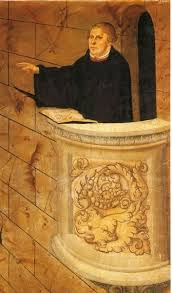
In today's Gospel we hear Jesus describing what is the task of the Holy Spirit in the proclamation of the Gospel: reproving the world of sin, of righteousness, and of judgment. First comes the conviction of sin by the preaching of the law: the world--and we ourselves--need its correction and accusations, to be convinced that we are indeed sinful and unclean. Second, the righteousness of Christ is put forth, by sharp contrast. For he was without sin in every respect. But third, the judgment is not upon us who are worthy of condemnation, but upon the devil; for the righteousness of Christ is his gift to his people. Thus they are washed in his laver of Baptism, their sins are drowned in his blood which they receive at the altar, and they are pronounced innocent by this holy Gospel. The sermon.
Subscribe to:
Posts (Atom)


 Posts
Posts


